Water Shortage in Delhi: 7 Critical Causes and Powerful Government Response Explained
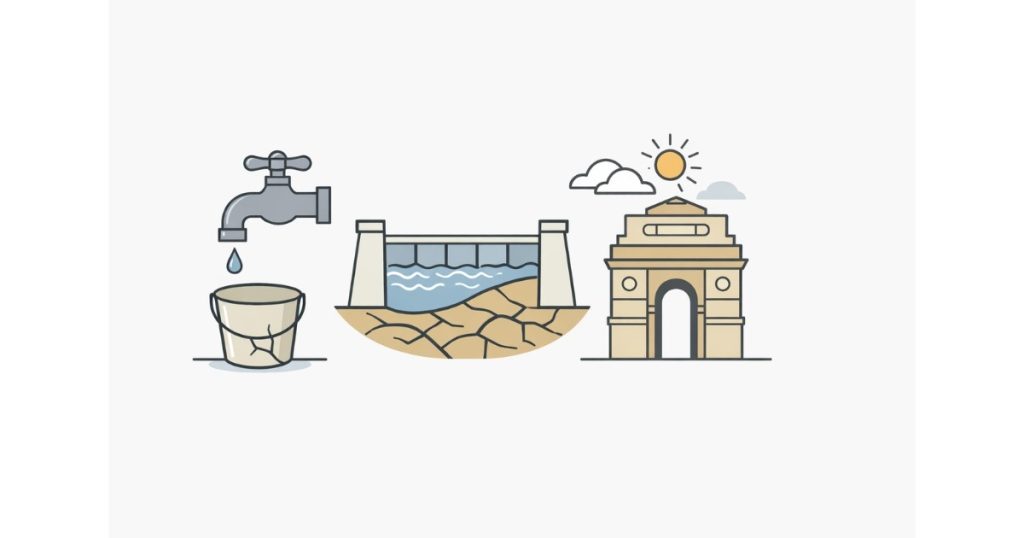
People collecting water during water shortage in Delhi
New Delhi: The issue of Water Shortage in Delhi has once again come into sharp focus, as the national capital faces increasing pressure on its already strained water resources. With rising temperatures, population growth, and uneven distribution systems, the Water Shortage in Delhi is affecting millions of residents across the city.
Experts warn that unless structural and policy-level changes are implemented, the Water Shortage in Delhi could intensify in the coming years, impacting both urban living standards and economic activity.
Understanding the Water Shortage in Delhi
The Water Shortage is not a new phenomenon. For decades, the city has struggled to meet its daily water demand. Delhi requires over 1,200 million gallons per day (MGD) of water, but supply often falls short, especially during peak summer months.
The Water Shortage is particularly severe in unauthorized colonies, slum areas, and peripheral regions where pipeline infrastructure is limited or inconsistent.
Key Causes Behind the Water Shortage
1. Rapid Urbanisation
One of the primary reasons for the Water Shortage is rapid population growth. As more people migrate to the city for employment and education, demand for water continues to rise.
The existing infrastructure has struggled to keep pace, contributing significantly to the Water Shortage.
2. Dependence on External Water Sources
Delhi relies heavily on neighboring states for water supply, including Haryana and Uttar Pradesh. Rivers such as the Yamuna play a critical role.
Disputes over water sharing and seasonal variations often worsen the Water Shortage in Delhi, making the city vulnerable to external factors.
3. Groundwater Depletion
Excessive extraction of groundwater has led to alarming declines in water tables. Many areas in Delhi now fall under “over-exploited” zones.
This overdependence on groundwater has aggravated the Water Shortage, especially in areas without reliable municipal supply.
4. Climate Change and Heatwaves
Rising temperatures and erratic rainfall patterns have intensified the Water Shortage. Heatwaves increase water consumption while reducing natural replenishment sources.
Climate variability is now considered a major contributor to the Water Shortage.
5. Infrastructure Losses and Leakages
A significant portion of treated water is lost due to pipeline leakages and outdated infrastructure.
These inefficiencies play a major role in the Water Shortage, as a large volume of water never reaches end users.
Impact of Water Shortage
1. Daily Life Disruptions
The Water Shortageaffects households directly. Residents often rely on water tankers, leading to increased costs and uncertainty.
In many areas, water supply is limited to a few hours a day, intensifying the Water Shortage.
2. Health and Hygiene Concerns
Limited access to clean water can lead to poor sanitation and hygiene issues. The Water Shortage increases the risk of waterborne diseases.
Communities with irregular supply are particularly vulnerable to health risks.
3. Economic Impact
Businesses, especially in sectors like hospitality and manufacturing, are affected by inconsistent water supply.
The Water Shortage can disrupt operations, increase costs, and reduce productivity.
4. Social Inequality
The Water Shortage disproportionately affects low-income communities. While affluent areas may access private solutions, poorer neighborhoods face acute shortages.
This creates a widening gap in access to basic resources.
5. Environmental Stress
Over-extraction of groundwater and dependence on external sources put additional strain on ecosystems.
The Water Shortage is closely linked to environmental degradation, including declining river health and biodiversity loss.
Government Response to Water Shortage in Delhi
1. Water Supply Augmentation Projects
Authorities have initiated projects to increase water supply, including treatment plants and pipeline expansions.
These efforts aim to reduce the Water Shortage in Delhi by improving overall availability.
2. Rainwater Harvesting Initiatives
Rainwater harvesting has been promoted as a sustainable solution.
By encouraging buildings to install harvesting systems, the government hopes to mitigate the Water Shortage in Delhi and recharge groundwater levels.
3. Yamuna Cleaning and Restoration
Efforts to clean and rejuvenate the Yamuna River are underway.
Improving river water quality can contribute to reducing the Water Shortage in Delhi by enhancing usable water resources.
4. Regulation of Groundwater Usage
Authorities have implemented guidelines to regulate groundwater extraction.
These measures are intended to control overuse and address the Water Shortage in Delhi in the long term.
5. Smart Water Management Systems
Technology-driven solutions, such as smart meters and leak detection systems, are being introduced.
Such innovations can help reduce wastage and improve efficiency, addressing the Water Shortage in Delhi more effectively.
Role of Citizens in Addressing Water Shortage in Delhi
The Water Shortage in Delhi cannot be resolved by government efforts alone. Public participation is essential.
Citizens can contribute by:
- Conserving water in daily use
- Fixing leaks promptly
- Adopting rainwater harvesting
- Avoiding wastage
Collective action can play a significant role in reducing the Water Shortage in Delhi.
Long-Term Solutions to Water Shortage in Delhi
1. Sustainable Urban Planning
Future development must integrate water resource management.
Better planning can help prevent further escalation of the Water Shortage in Delhi.
2. Recycling and Reuse of Water
Wastewater treatment and reuse can significantly reduce demand for fresh water.
This approach can help tackle the Water Shortage in Delhi sustainably.
3. Inter-State Cooperation
Improved coordination with neighboring states is crucial.
Resolving water-sharing issues can ease the Water Shortage in Delhi.
4. Public Awareness Campaigns
Educating people about water conservation is essential.
Awareness initiatives can help reduce the impact of the Water Shortage in Delhi over time.
5. Infrastructure Modernisation
Upgrading pipelines and reducing losses is critical.
Efficient infrastructure can significantly improve supply and reduce the Water Shortage in Delhi.
Why This Issue Matters
The Water Shortage in Delhi is not just an environmental concern but also a socio-economic challenge.
It affects:
- Public health
- Economic growth
- Quality of life
- Environmental sustainability
Addressing the Water Shortage in Delhi is essential for ensuring long-term urban resilience.
Outlook Ahead
The Water Shortage in Delhi remains a pressing issue that requires coordinated efforts from government agencies, experts, and citizens.
While steps are being taken to improve supply and management, long-term solutions will depend on sustainable practices and policy reforms.
As climate challenges intensify and urban demand continues to grow, tackling the Water Shortage in Delhi will be critical for the city’s future.
Also Read: Amit Shah Pays Tribute to Dr Rammanohar Lohia on Birth Anniversary
Last Updated on Wednesday, April 1, 2026 3:55 pm by Delhi News Wire Team
About The Author