Water Shortage in Delhi 2026: 7 Alarming Reasons Behind the Capital’s Worst Water Crisis
Water Shortage in Delhi has reached alarming levels in 2026, affecting households, businesses, and daily life. Here are causes, impact, government response, and solutions.
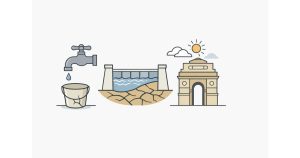
Water Shortage in Delhi has once again emerged as a major civic crisis in 2026, impacting millions of residents across the national capital. From dry taps in residential colonies to long queues for water tankers, the situation highlights the fragile state of Delhi’s water management system.
As summer temperatures rise and rainfall remains uncertain, the water crisis has intensified, sparking concern among citizens, policymakers, and environmental experts alike.
Water Shortage in Delhi has once again surfaced as a major civic crisis, affecting lakhs of residents across the national capital. Several parts of the city are experiencing irregular water supply, with households reporting dry taps for hours and increasing dependence on water tankers. As temperatures rise and demand peaks, the pressure on Delhi’s already stretched water infrastructure has intensified, exposing long-standing issues related to supply management, leakages, and over-consumption. The situation has prompted fresh concerns over how the city will meet its water needs in the coming months.
1. Why Water Shortage in Delhi Is Getting Worse
The Water Shortage in Delhi has intensified due to a combination of environmental stress and administrative challenges. Rapid urbanisation has increased water demand far beyond sustainable limits, while erratic rainfall patterns have reduced natural recharge. Delhi continues to rely heavily on water from neighbouring states, making the city vulnerable whenever supply is disrupted.
2. Yamuna River and Its Role in Water Shortage in Delhi
The Yamuna River remains central to Delhi’s water supply, contributing a major share of raw water. However, pollution, reduced upstream flow, and seasonal variations have severely impacted availability. As water levels decline, treatment plants struggle to operate at full capacity, directly worsening the Water Shortage in delhi
3. Areas Most Affected by Water Shortage in Delhi
Several residential and commercial zones are bearing the brunt of the Delhi water shortage . South and West Delhi colonies, parts of Dwarka, and unauthorised settlements are facing prolonged water cuts. In many localities, residents depend entirely on water tankers, which has increased costs and led to frequent disputes.
4. Impact of Water Shortage in Delhi on Daily Life
The ongoing Delhi water shortage has disrupted everyday routines for millions. Households are forced to ration water, while schools, hospitals, and small businesses struggle to maintain basic operations. Service industries such as hotels, restaurants, and salons have reported losses due to unreliable water supply, raising concerns about long-term economic impact.
5. Government Response to Water Shortage in Delhi
Authorities have rolled out emergency measures to manage the Water Shortage in Delhi, including additional water tankers, pipeline repairs, and appeals for water conservation. The Delhi Jal Board has also intensified efforts to curb leakage and water theft. Despite these steps, experts argue that short-term solutions cannot fully address the scale of the problem.
6. Expert Warnings on Water Shortage in Delhi
Urban planners and environmental experts warn that the Water Shortage in Delhi could worsen if structural reforms are delayed. Climate change, declining groundwater levels, and insufficient recycling of wastewater are key concerns. Experts stress that without sustainable planning, Delhi may face chronic water stress in the coming years.
7. Long-Term Solutions to Prevent Water Shortage in Delhi
Solving the Water Shortage in Delhi requires long-term commitment rather than seasonal interventions. Strengthening rainwater harvesting, improving wastewater reuse, modernising pipelines, and reducing dependence on tanker supply are seen as essential steps. Public awareness and citizen participation will play a crucial role in ensuring lasting water security.
Conclusion
The Water Shortage in Delhi is no longer a temporary summer issue but a persistent urban crisis. While government actions provide some relief, sustainable water management and responsible usage are critical for the future. Without urgent reforms, Delhi risks facing an even more severe water emergency in the years ahead.
Also read : 5 Shocking Reasons Why Delhi Temperature Dropped to Seasonal Lows Amid Cold Wave
Last Updated on Friday, January 23, 2026 3:40 pm by Pushkarini Annabathula
About The Author